Listing Photography luminis.media for Builders and Developers
Real estate marketing for builders and developers is a different sport than selling an existing home. You are not just showing square footage, you are selling vision, process, and credibility at scale. Listing photography sits at the center of that effort, and when handled with the rigor that construction timelines demand, it turns site dust into signed contracts. This article unpacks how Luminis Media approaches property and listing visuals for builders and developers, where the tricky parts hide, and how to translate images into measurable return.
The builder’s reality meets the camera
A homebuyer can forgive an imperfect room if the emotion lands. A developer’s buyer looks for a different signal. They scrutinize consistency across a portfolio, lighting that reveals material quality, and evidence that the builder can execute at scale. The task is not to chase pretty pictures, it is to engineer reliability: repeatable captures across multiple lots, phases, and models, with images that line up with brand and budget.
That is why teams like Luminis Media build production around construction cadence. On a tract development, the window for clean photos can narrow to a few days between punch-out and occupancy. On a luxury infill or custom build, the challenge shifts to honoring craftsmanship and finishes under honest light. A real estate photographer from Luminis Media carries a site map with milestones, not just a shot list.
What makes developer listing photography different from retail real estate photos
MLS compliance and wide rooms still matter, but developer marketing carries added layers:
- Consistency across communities, models, and phases, so a catalog of images feels like one brand.
- Scalability, handling ten builds per month without quality drift.
- Technical accuracy in finishes and colors to prevent mismatched expectations.
- Documentation value, so images serve marketing and construction records.
- Multi-format delivery, from MLS crops to print spreads and web hero banners.
The phrase Luminis Media real estate photography covers a lot of ground, but for builders and developers, it means a system built for volume, brand coherence, and technical control.
Planning around construction, not the other way around
A common failure point is scheduling a shoot when a site is only 95 percent complete. Photos with blue tape, missing door hardware, or dusty floors cost money long after the last subcontractor leaves. At luminis.media, the scheduling flow starts with your build tracker. Superintendents mark reach-back tasks, and the photography team blocks tentative windows with weather contingency. For a 40-lot release, we stagger exteriors at golden light over two to three evenings, then interiors midday across the same week, accounting for cleaners and staging arrivals.
On custom and luxury builds, the method stretches to include client walkthroughs and designer installs. Luxury real estate photography with Luminis Media might mean two sessions, one for architecture and one post-styling, because a spiral stair reads best in low-contrast morning light, while velvet upholstery tolerates a richer afternoon.
Pre-shoot readiness: what crews can do that changes the result
Small tasks multiply into big visual gains. When supers, cleaners, and staging teams prepare well, we capture more scenes in the same light window and preserve color fidelity.
Checklist for builder site prep before a Luminis Media listing session:
- Power and HVAC on 24 hours prior to stabilize lighting temperatures and reduce humidity on glossy surfaces.
- Window cleaning inside and out, with stickers removed on exterior glazing and appliances.
- Replace high-CRI bulbs to match color temperature across rooms, ideally 3000 to 3500 K for warm-neutral interiors.
- Punch list removal in sightlines, such as outlet plates, thermostat covers, and floor protectors.
- Exterior touch-ups complete, including irrigation off the morning of the shoot to avoid water spotting on hardscape.
That list looks small for a reason, it is the 80/20. When handled the day before, Luminis Media real estate photos need less post-production, and you get images truer to what buyers will see.
Light and color, the non-negotiables
Developers invest in materials, and photography should respect that. True whites must look white, not mint. Rift oak should read as rift oak, not walnut. Luminis Media real estate photographer teams carry gray cards and spectrometers to neutralize color casts in-camera. They use bracketed exposures and controlled flash blending to hold contrast without washing textures. That matters for quartz with sparkle, high-gloss lacquers, and subtly veined stone that loses detail under heavy HDR.
Exterior color is trickier. Fresh stucco can shift with morning fog or reflected lawn greens. For real estate photography luminis.media workflows, we often capture a color reference frame per facade and adjust globally, preserving the paint schedule’s intent. You never want buyers debating whether your “Cool December” is actually blue.
Composition with intent, not habit
Wide lenses sell space, but overuse distorts craftsmanship. A Luminis Media property photography approach toggles between establishing frames and detail narratives. Kitchens earn the big corner-to-corner shots with logical sightlines through to living areas. Then come vignettes that show dovetail drawers, mitered edges on stone, and the rhythm of cabinet reveals. On a multifamily lobby, we set the hero frame on-axis to the reception, and a second frame slightly oblique to showcase depth. The sequence tells how a future resident will enter, pause, and move, not just what the room looks like.
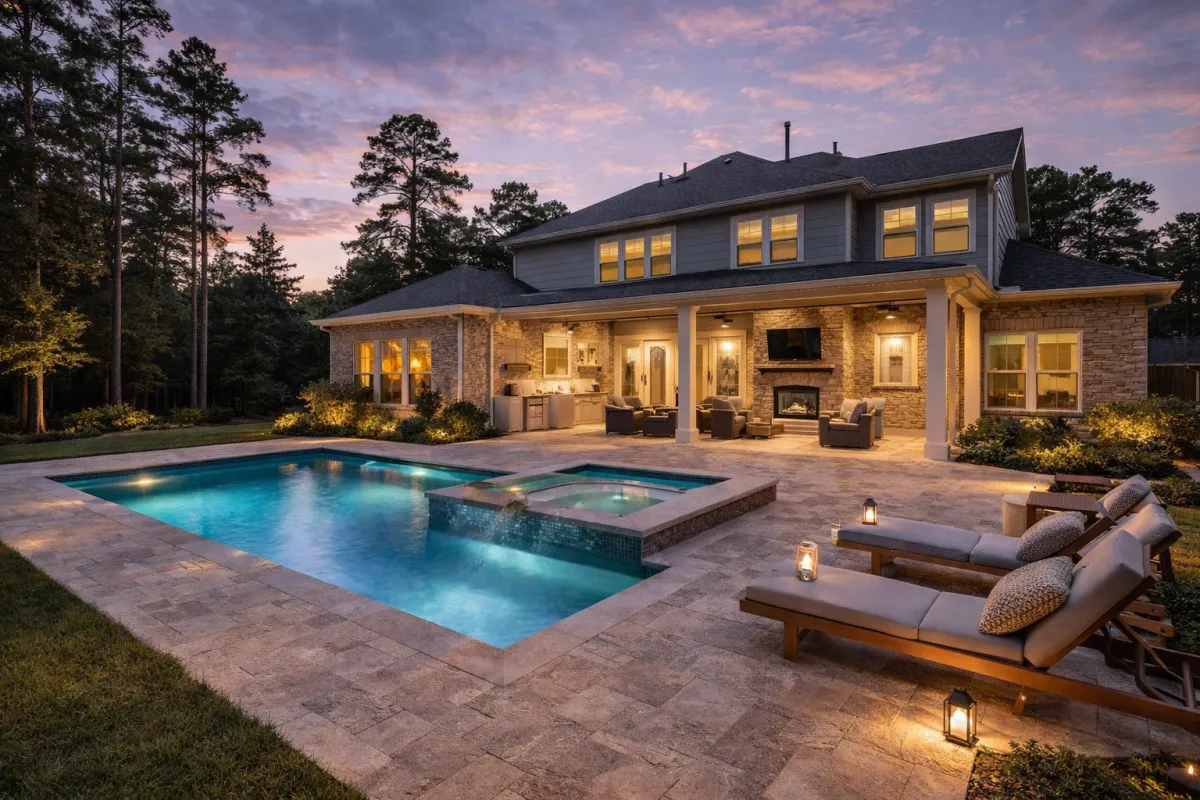
For townhome elevations, we avoid the dead-on architect’s elevation unless requested. A slight three-quarter angle, shot from a leveled tripod with corrected verticals, keeps lines honest while conveying volume. When sunlight is harsh, we schedule twilight for glow and balance. Any seasoned real estate photographer at Luminis Media knows that two good angles at the right time beat five average ones at noon.
The role of people and scale
Builders often ask whether to include people in frames. For spec listings headed to MLS, the answer is usually no. For lifestyle selling on web and brochures, carefully placed figures can translate scale and use. A figure walking past a 9 foot pivot door makes the dimension obvious without a measuring tape. A hand turning a knurled faucet in a detail shot shows material intent. These frames require releases and careful styling, and they sit outside strict MLS rules, so we plan them as a separate set.
Aerials, ground control, and the truth about drones
Drones turn lots into context. For a tract near a new school, an aerial that shows routes and green space is persuasive. The trick is complying with airspace, privacy, and local ordinances. Luminis Media real estate videography and aerial teams fly under Part 107, log NOTAM checks, and coordinate with site managers on takeoff zones. We also incorporate ground control markers when maps or orthomosaics are required for progress documentation.
Aerial twilights sell especially well on amenity sets, but they compress schedules. Sunset allows 10 to 20 minutes of premium sky. That means we practice the exact flight path in daylight and then repeat at dusk. It is not romantic, it is repeatable.
Videography that respects architecture
Motion expands what photography cannot. Door swings, the reveal from foyer to living area, and the way sunlight tracks across a primary suite read better on video. Real estate videography with Luminis Media uses gimbal moves sparingly, no roller-coaster tours. We compose long beats per space, anchor on architectural lines, and avoid color shifts with locked white balance. Audio matters too. Even if we will overlay music, capturing clean room tone helps hide cuts and deliver a quieter pace that feels premium.
Developers sometimes request spoken narration. When appropriate, we script lines tied to points on screen, not generic superlatives. Mention the engineered floor system under thick slabs or the ERV tied to the HVAC. Buyers of higher end product notice technical detail, and those lines can be reused in sales conversations.
Floor plans, data, and the calm power of accuracy
Floor plans close gaps that photos leave open. They also stabilize buyer expectations. We recommend dimensional plans for online listings and printable options for sales centers. Luminis Media listing photography packages can integrate laser-based measurements or coordinate with your drafting team. What matters is alignment. The photo that looks toward the pantry should pair with a floor plan arrow that points the same direction. Model names, elevations, and plan options should be consistent across file names and brochure text.
Scheduling across multiple lots and models
When a release includes four plans and three elevations per plan, efficiency sits in the overlap. We group shots by repeated rooms. If Plans A and B share a kitchen layout, we light once, capture both angles, then swap to finish variations for the second model. Property photography luminis.media workflows compress setup time while respecting differences. We also coordinate with staging so furniture scales match each plan. A sectional that works in a 22 foot room swallows a 16 foot room. Getting this wrong flattens product lines and confuses pricing tiers.
On exteriors, planting and sod age quickly. We shoot elevations with the most mature landscaping first, and we capture tight shots of corners and materials that will look the same across the development. Those details become your brand library.
Safety and site discipline
Photography crews are guests on a construction site. That means PPE when appropriate, clean cords, no blocking of egress, and respect for the superintendent’s authority. We clear rooms with trades, not the other way around. For occupied multifamily or phased deliveries, we coordinate with property management to avoid resident routes and to protect privacy. When Luminis Media real estate photographer teams capture amenities in use, we plan with signage and opt-in release stations.
The hidden benefit of disciplined safety is better images. Quiet sets mean fewer reflections of moving bodies in glossy cabinetry and glass.
Weather calls, reshoots, and the realities of time
Developers cannot wait for perfect skies, but bad light costs money if it hides materials or muddies colors. For exteriors, we run two thresholds. If cloud cover is bright and consistent, we proceed and build contrast in post. If clouds are broken and wind moves them quickly, we often call it. Patchy sun means striped elevations. Twilight reshoots happen too. A dead bulb at dusk turns a hero shot into a repair ticket. Luminis Media property photography contracts usually include weather holds and a small bank of reshoot time, because the cost of a compromised facade lives for years in brochures and websites.
Branding, not just logos
Brand lives in framing choices, pacing, and color response. Developers with multiple product lines need distinct visual vocabularies. Entry-level series lean brighter, faster, more energetic, with airy compositions. Luxury lines slow down, anchor on materials, and hold longer shutter-driven softness in water features or fireplaces. Luminis Media luxury real estate photography respects those boundaries. We build LUTs and color profiles per brand family, and we document them so new crews can match the look over time.
Logos and end cards arrive after that groundwork. If the images contradict the brand voice, a logo will not fix it.
Staging that earns its keep
Full staging is not always practical across dozens of models. Smart partial staging can do more heavy lifting than budget suggests. In kitchens, stools, a simple table setting, and a few organic elements are enough to humanize scale. Primary suites need appropriate headboard heights to show ceiling volume. Baths benefit from restraint. One stack of towels and a single plant beat a spa store explosion. Luminis Media real estate photos prioritize sightlines that make staging look inevitable, not decorated.
For luxury infill, we collaborate with the designer. If a custom sofa will not arrive on time, we decide whether to shoot pre-install and return for a handful of marquee frames later. Mismatched temporary furniture can mis-price a property in the buyer’s mind.
Documentation and warranty support
Photos do double duty. They sell, and they also document what was delivered. Builders dealing with warranty claims appreciate photo sets that show tile pattern orientation, grout lines, and exterior flashing at delivery. Luminis Media listing photography captures a small series of documentation frames after the marketing set, flagged and archived separately. They rarely appear online, but they prevent disputes when a homeowner alleges a change that never happened.
Rights, usage, and the long tail
Clarity on licensing saves headaches when models change or communities sell out. Our default is developer usage across MLS, web, print, third-party portals, and signage for the life of the project. Manufacturers and trades sometimes ask to use images that feature their products. Decide early whether to allow it, and on what terms, because those requests can be valuable trade currency. A window manufacturer sharing your elevation across their channels can funnel qualified traffic. Luminis Media real estate photography contracts name rights holders and permissible uses, so no one is guessing six months later.
File delivery that makes marketing faster
Assets slow down teams when they arrive mislabeled or in the wrong sizes. Luminis Media Luminis Media real estate photography listing photography packages deliver a structured library: master TIFFs for archival, high-res JPEGs for print, web-optimized sets for CMS, and MLS crops that respect platform limits. Filenames tie to model, elevation, and room, so web builders can drag and drop without hunting. Color profiles are embedded, and we include a one-page spec sheet with DPI, color space, and intended uses. Real estate photos luminis.media teams also push assets to shared drives or DAMs you already use, so the handoff is invisible to your marketers.
How many images per model is enough
It depends on plan complexity and the channel. For MLS, 25 to 40 images often tells the story without fat. For web galleries and brochures, 40 to 65 gives space for both hero frames and material vignettes. Luxury real estate photography Luminis Media projects may produce 80 to 120 final frames when details deserve their own pages. The key is editing. A builder library with 600 images per model hides the best of them. We advocate ruthless selection based on narrative, not the number the schedule can absorb.
The role of CGI and placeholders
On pre-sell, renderings bridge the gap. We integrate CGI hero exteriors and amenity renders with real context imagery. Aerial plates from drones ground the render in reality. Indoor renders benefit from direction that mirrors the eventual photo game plan, so later, when the real model is ready, we replicate the composition. That continuity helps sales teams swap assets seamlessly. Luminis Media real estate videography can also sequence from live-action site footage into animated amenity maps for clarity on circulation and proximity.
Measuring what works
Images should prove themselves. UTM-tagged gallery links in digital ads, time on page metrics for model galleries, and click-through to book a tour all trace the value of Luminis Media real estate photos. On signage and print, unique QR codes route to model-specific landing pages. Sales teams can correlate requests for certain plans with specific images in their follow-ups. When a twilight exterior drives the most inquiries, we know to prioritize that angle across similar elevations.
Cost, scope, and the math builders care about
Pricing should mirror complexity and scale. A single custom home with designer oversight and two sessions carries a different effort than a 12-model tract with repeat layouts. We build proposals around shoot days, travel, post-production hours, and delivery scope, and we discount on volume when multiple models share lighting and staging setups. The question developers ask most is which line item moves the needle. From experience, it is usually twilight exteriors and kitchen hero frames. If the budget is limited, spend there. Real estate photography Luminis Media teams can then cover the rest with efficient, honest captures.
A simple production flow that survives real-life chaos
Developments luminis.media real estate photos rarely run on perfectly smooth timelines. Permit delays, backordered pendants, and sudden rains will happen. A calm, repeatable process helps everyone keep moving.
A compact process Luminis Media uses with builders:
- Pre-pro meeting with superintendent and marketer, align on brand look and site readiness checklist.
- Provisional schedule set to construction milestones, with weather holds baked into calendar invites.
- Shoot day with live room order tracked in a shared doc, and notes for any necessary returns.
- Proof gallery within 48 to 72 hours, selection meeting with marketing lead, and revisions list scoped.
- Final delivery, labeled and resized by channel, with archiving to a shared library and an internal backup.
This rhythm preserves flexibility without losing control, and it creates predictable touchpoints for your team.
Common pitfalls and how we avoid them
Mixed color temperatures creep into images through overlooked bulbs or daylight leaks. We solve this by carrying matched bulbs and gaffer tape for temporary window coverage during flash blends. Reflections in black stainless appliances often include the photographer or a tripod. We stage off-axis and use longer lenses to minimize direct reflections, and we bring polarizers for glass and water. Over-polished HDR is another trap. Luminis Media real estate photography keeps local contrast natural, avoids crunchy edges, and reserves sky replacements for cases where the weather robbed the set of context.
On multifamily projects, amenities can feel generic. We look for your differentiators, perhaps a coworking bench with power at every seat, or a bike workshop with a branded wall. We light those spaces as though they are products because they are.
A brief case snapshot
A regional builder rolled out a four-plan community on a deadline. Elevations shared materials, but kitchen options varied. We shot exteriors over two evenings, interiors across three days, and split staging across two models. Total final selects: 168 images and two 60 second videos. The web gallery was ready a week before the grand opening. Ads used three hero frames per plan. Inquiry volume doubled compared with a prior launch, and time on page increased by 42 percent on the model detail pages. The variable that moved most traffic, beyond price, was a single twilight exterior that showed entry lighting and warm interior glow through a picture window. It sounds simple. It is. What matters is timing that frame perfectly.
Why luminis.media for builders and developers
A real estate photographer luminis.media brings two skills that matter most to builders: schedule literacy and brand fidelity. We read site calendars, plan around inspections and cleaning crews, and we defend your brand look across locations and seasons. Whether you need Luminis Media real estate photos for MLS, property photography for brochures, or full Luminis Media real estate videography for landing pages, the throughline is the same. Honest light, disciplined process, and images that help sales teams do their jobs faster.
If you are wrestling with a launch calendar or considering a refresh of your visual library, start earlier than you think. Loop in your superintendent, your marketer, and your photographer on the same call. Share the finishes schedule and the staging plan. Decide where to place your twilight chips. Then let a team that lives in the overlap between construction and imagery carry the work across the line.